Behold the majesty of our world with the best drone photos around


These enhancements and the general pivot toward drone-based aerial imaging is changing the field of photography, and even the photojournalism game as we know it. To illustrate this burgeoning photography market, SkyPixel, an aerial photography community run together with drone manufacturer DJI, received more than 27,000 photo submissions from 131 countries during its 2016 annual photography contest.
We have included some of these winners as well as choice selections from sites like Dronestagram — an Instagram account entirely dedicated to aerial drone photography — among others in this gallery of truly epic drone photos. From awe-inspiring views of World Heritage Sites and tantalizing up-close glimpses of lava-spewing volcanoes to sights of the shifting sands along the Arabian Desert, here are 50 of our favorite drone photos from around the globe.
If you enjoy this photo gallery, you may also want to check out our favorite space photos. We’ve also put together a beginner’s guide to aerial photography, if you’re looking to get into the hobby.

For more technological trending news, research and informations click here

Facebook’s very, very sorry, and it has absolutely no intention to change


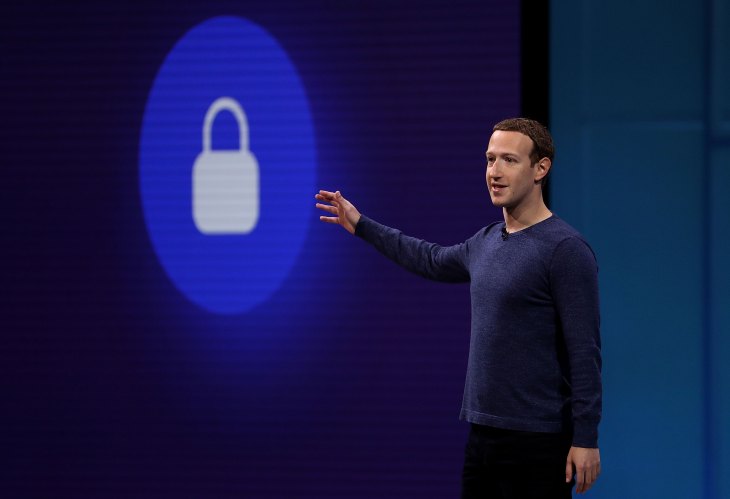
It was a remarkably brash performance. Zuckerberg turned his senate appearance into a gag. In doing so, he humanized himself and his company while painting critics – including the senators who questioned him – as inconsequential. It was a good joke. It also made Facebook’s intent clear.

Build it, whether they want it or not

For a time, it seemed the keynote made us witness to the most unlikely of supernatural occurrences. It was as if Steve Ballmer, bored and frustrated by his Clippers’ lackluster performance, possessed the body of Zuckerberg and projected his consciousness into F8’s convention hall. If not that, there was at least some forced enthusiasm from the normally stilted Zuckerberg.
“We will keep building!” he bellowed, like a general rallying his troops. “This is an important moment. We need to do more to keep people safe, and we will. But we also need to keep building and bring the world closer together.” At least Zuckerberg didn’t jump around the stage.
The company did throw all of us a bone with its new Clear History function, which lets you delete your Facebook data history in a manner akin to erasing your web history in a browser. It’s a useful, appreciated feature, but not one worth much applause. Companies like Google and Microsoft both have in-depth transparency of collected data, with the option to remove it, so Facebook’s big announcement is merely an attempt to catch up with its peers.
“We need to do more to keep people safe, and we will. But we also need to keep building and bring the world closer together.”
Facebook followed Clear History with a full salvo of new features that might cause privacy concerns – like Dating.
Zuckerberg’s mockery of his senate appearance was a good joke, but it can’t compare to the bitter irony of Dating’s arrival.
Facebook’s image as bad as it has ever been. It’s struggling to retain young users and constantly alienating people already on the service with its privacy screw-ups. A recent Gallup poll found that 74 percent of people who use Facebook are “very concerned” or “somewhat concerned” about invasion of privacy. Only 11 percent said they’re “not concerned at all.”
Those are staggering numbers. The average American is more likely to believe Bigfoot exists than trust Facebook. So, yeah… why not let Facebook into your love life? What could possibly go wrong? Plenty, of course. There’s a reason why most people don’t use major social media websites for dating. Independent sites offer a degree of anonymity.

Mark Zuckerberg Keynote Address Overview
Facebook

Even Tinder, which directly links to Facebook, pulls in only so much data from the social network. Zuckerberg of course promises that Dating will be oh-so-responsible with your private information, displaying only first names, but it’s not yet clear how you’ll decide what photos, information, and interests appear.
While Dating was the creepiest new tendril built by Facebook at F8, it wasn’t alone. The company’s pursuit of VR is plenty disconcerting, since it implies a desire to insert Facebook between people and their virtual experiences – which, of course, will often be social.
The average American is more likely to believe Bigfoot exists than trust Facebook.
At another point, Zuckerberg went all starry-eyed over a computer vision technology that can recreate the rooms of a home in virtual reality using only photos. Though presented as a way to revisit your childhood home, it’s not hard to think of more nefarious uses. Computer vision already lets people make fake pornography of famous actresses, or anyone else with a few hundred photos posted online. Now, Facebook is showing us how people might recreate an intimate scene on someone’s couch using nothing more than photographs.
Jeez. It’s hardly a wonder everyone at Facebook seems so happy.

Nothing to see here

It’s easy to criticize, of course, and Facebook would like you to remember that. Facebook’s constant references to positivity are more than part of corporation culture. They’re also an obvious public relations ploy meant to distraction us – and developers, who are F8’s intended audience — from the company’s problems. Facebook’s naïve optimism is that of a child elbow-deep in a bag of Oreos who, once caught, insists she only took them to share with everyone.

facebooks f8 keynote proves the company sees no reason to change mark zuckerberg addresses facebook developer conference
Justin Sullivan/Getty Images

What would be your response to that scene? Would you thank the kid for her kindness? Would you let her go outside to ‘share’ them freely? Would you give her access to your instant messages? Am I taking this metaphor too far?
You get the point. Facebook is playing us for fools. The positive tone is meant to disguise a more sinister message. The company thinks it knows what you want better than you do, and it’s going to build what it thinks you want, whether you like it or not. I mean, what are you going to do? Leave? Hah!
Don’t be fooled. Facebook’s F8 keynote changed nothing. It’s still the same company it was before, prone to familiar mistakes, making hollow promises. Above all, it’s a company — one that makes its money by selling your personal data. Give that a moment’s thought before you sign up to make Zuckerberg your personal matchmaker.
For more technological trending news, research and informations click here

What to expect from Microsoft Build 2018: Less Windows, more cloud


What that means, put simply, is you shouldn’t expect any big news about Windows, Surface, or other products that cater to home users. That’s particularly true this year. In the past, Microsoft has sometimes shown big new features of upcoming Windows releases – but a big patch just released. We’ll likely see hints at what the next Windows patch looks like but don’t expect anything concrete.

Don’t expect Surface devices

As for Surface?
Microsoft has never made a major Surface product announcement a Build, so it likely won’t start this year. The Surface Pro and Surface Book 2 are still competitive, so we likely won’t see an update for either until fall of this year.


lenovo-thinkpad-x1-tablet-versus-the-microsoft-surface-pro
Surface Pro 4 Mark Coppock

It’s not inconceivable to think Microsoft would tease a new Surface device at the conference. Build wouldn’t be a bad place to briefly talk about the long-rumored Surface Phone, because developers will be interested in it and how to code for it.
Still, that’s a stretch. Build is a hardcore developer conference, and single tickets start at $2,500. Devoting time to a device that doesn’t necessarily impact how developers code for Microsoft products might make the attendees rather cross.

Do expect coding

Microsoft has two keynotes planned for Build. The first is on May 7, the second is on May 8, and both start at 8:30 a.m. Pacific time. The keynotes can be intriguing, as Microsoft often uses them to demonstrate cutting-edge technology or near-future concepts. Just be prepared to sit through coding. Yep. Live coding. On stage.


top tech stories 04 03 2016 build2015 satya nadella final print 1200x0

This coding sessions have infamously become a sore point for tech journalists and Microsoft superfans. Each group would rather see hot new features than watch someone de-bug using the latest version of Visual Studio. Build isn’t for either group. Build is for developers, and developers want to see how a new feature will change the way they work.
While drab, the coding sessions can be insightful. They offer a surprisingly deep look at how Microsoft, and its software, operates. That’s not something you’ll find at Facebook F8 and Google I/O keynotes, both of which are more traditional press conferences.

Get ready to get nerdy

What this all means, in sum, is you’ll need to get nerdy. Real nerdy. Build can be a spectacle, at times, as Microsoft isn’t shy about placing bold demos on stage. At its heart, though, it’s for developers, developers, developers. You’ll learn where the company is going, and what its engineers think the future will look like – not when your next Surface will hit store shelves.
For more technological trending news, research and informations click here

GERMAN MINISTER; FACEBOOK IS STILL FALLING SHORT ON PRIVACY


Germany’s justice minister has written to Facebook  calling for the platform to implement an internal “control and sanction mechanism” to ensure third-party developers and other external providers are not able to misuse Facebook data — calling for it to both monitor third party compliance with its platform policies and apply “harsh penalties” for any violations.

The letter, which has been published in full in local media, follows the privacy storm that has engulfed the company since mid March when fresh revelations were published by the Observer of London and the New York Times — detailing how Cambridge Analytica had obtained and used personal information on up to 87 million Facebook users for political ad targeting purposes.

Writing to Facebook’s founder and CEO Mark Zuckerberg, justice minister Katarina Barley welcomes some recent changes the company has made around user privacy, describing its decision to limit collaboration with “data dealers” as “a good start”, for example.

However she says the company needs to do more — setting out a series of what she describes as “core requirements” in the area of data and consumer protection (bulleted below).

She also writes that the Cambridge Analytica  scandal confirms long-standing criticisms against Facebook made by data and consumer advocates in Germany and Europe, adding that it suggests various lawsuits filed against the company’s data practices have “good cause”.

“Unfortunately, Facebook has not responded to this criticism in all the years or only insufficiently,” she continues (translated via Google Translate). “Facebook has rather expanded its data collection and use. This is at the expense of the privacy and self-determination of its users and third parties.”

“What is needed is that Facebook lives up to its corporate responsibility and makes a serious change,” she says at the end of the letter. “In interviews and advertisements, you have stated that the new EU data protection regulations are the standard worldwide for the social network. Whether Facebook consistently implements this view, unfortunately, seems questionable,” she continues, critically flagging Facebook’s decision to switch the data controller status of ~1.5BN international users this month so they will no longer be under the jurisdiction of EU law, before adding: “I will therefore keep a close eye on the further measures taken by Facebook.“

Since revelations about Cambridge Analytica’s use of Facebook data snowballed into a global privacy   scandal for the company this spring, the company has revealed a series of changes which it claims are intended to bolster data protection on its platform.

Although, in truth, many of the tweaks Facebook has announced were likely in train already — as it has been working for months (if not years) on its response to the EU’s incoming GDPR framework, which will apply from May 25.

Yet, even so, many of these measures have been roundly criticized by privacy experts, who argue they do not go far enough to comply with GDPR and will trigger legal challenges once the framework is being applied.

For example, a new consent flow, announced by Facebook last month, has been accused of being intentionally manipulative — and of going against the spirit of the new rules, at very least.

Barley picks up on these criticisms in her letter — calling specifically for Facebook to deliver:

More transparency for users
Real control of users’ data processing by Facebook
Strict compliance with privacy by default and consent in the entire ecosystem of Facebook
Objective, neutral, non-discriminatory and manipulation-free algorithms
More freedom of choice for users through various settings and uses
On consent, she emphasizes that under GDPR the company will need to obtain consent for each data use — and cannot bundle up uses to try to obtain a ‘lump-sum’ consent, as she puts it.

Yet this is pretty clearly exactly what Facebook is doing when it asks Europeans to opt into its face recognition technology, for example, by suggesting this could help protect users against strangers using their photos; and be an aid to visually impaired users on its platform; yet there’s absolutely no specific examples in the consent flow of the commercial uses to which Facebook will undoubtedly put the tech.

Mark Zuckerberg Addresses F8 Facebook Developer Conference

The minister also emphasizes that GDPR demands a privacy-by-default approach, and requires data collection to be minimized — saying Facebook will need to adapt all of its data processing operations in order to comply.

Any data transfers from “friends” should also only take place with explicit consent in individual cases, she continues (consent that was of course entirely lacking in 2014 when Facebook APIs allowed a developer on its platform to harvest data on up to 87 million users — and pass the information to Cambridge Analytica).

Barley also warns explicitly that Facebook must not create shadow profiles, an especially awkward legal issue for Facebook which US lawmakers also questioned Zuckerberg closely about last month.

Facebook’s announcement this week, at its f8 conference, of an incoming Clear History button — which will give users the ability to clear past browsing data the company has gathered about them — merely underscores the discrepancies here, with tracked Facebook non-users not even getting this after-the-fact control, although tracked users also can’t ask Facebook never to track them in the first place.

Nor is it clear what Facebook does with any derivatives it gleans from this tracked personal data — i.e. whether those insights are also dissociated from an individual’s account.

Sure, Facebook might delete a web log of the sites you visited — like a gambling site or a health clinic — when you hit the button but that does not mean it’s going to remove all the inferences it’s gleaned from that data (and added to the unseen profile it holds of you and uses for ad targeting purposes).

Safe to say, the value of the Clear History button looks mostly as PR for Facebook — so the company can point to it and claim it’s offering users another ‘control’ as a strategy to try to deflect lawmakers’ awkward questions (just such disingenuousness was on ample show in Congress last month — and has also been publicly condemned by the UK parliament).

We asked Facebook our own series of questions about how Clear History operates, and why — for example — it is not offering users the ability to block tracking entirely. After multiple emails on this topic, over two days, we’re still waiting for the company to answer anything we asked.

Facebook’s processing of non-users’ data, collected via tracking pixels and social plugins across other popular web services, has already got Facebook into hot water with some European regulators. Under GDPR it will certainly face fresh challenges to any consent-less handling of people’s data — unless it radically rethinks its approach, and does so in less than a month.

In her letter, Barley also raises concerns around the misuse of Facebook’s platform for political influence and opinion manipulation — saying it must take “all necessary technical and organizational measures to prevent abuse and manipulation possibilities (e.g. via fake accounts and social bots)”, and ensure the algorithms it uses are “objective, neutral and non-discriminatory”.

She says she also wants the company to disclose the actions it takes on this front in order to enable “independent review”.

Facebook’s huge sprawl and size — with its business consisting of multiple popular linked platforms (such as WhatsApp  and Instagram), as well as the company deploying its offsite tracking infrastructure across the Internet to massively expand the reach of its ecosystem — “puts a special strain on the privacy and self-determination of German and European users”, she adds.

At the time of writing Facebook had not responded to multiple requests for comment about the letter.

UBITECH GETSB $820 MILLION IN FUNDING


Shenzhen-based home robotics company UBTECH announced this week that it has closed a massive $820 million Series C. The round, led by Tencent and a whole slew of other investors, follows a $100 million Series B and $20 million Series C.


The bipedal robotics maker certainly isn’t a household name here in the States — though the company’s taken a few baby steps over here, including a walking Stormtrooper robot released alongside The Last Jedi. It also debuted a “robotic butler” with a tablet face back at CES in January that seemed more proof of concept than shipping product — though UBTECH has promised a broad 2019 release date.


CEO James Zhou has promised the company will use this huge backing to accelerate its vision of bringing robots into the home.


“As technology evolves to include more voice and touch capabilities, people need new devices that communicate and interact more naturally and intuitively at home, at school and at work,” he said in a release tied to the announcement. “While trends in robots and robotics are developing, no company has yet stepped forward with the resources, vision and products ecosystem to transform robot fantasy and fiction into robot reality. UBTECH is bringing this reality to life by expanding the possibilities for innovation.”

DSCF3341


The company says the funding will go into R&D, hires and expanding its global footprint. UBTECH is one of a number of companies pushing home robotics beyond the Roomba, including a rumored upcoming device from Amazon. The technology has been a tough nut to crack in the preceding decades, but an $820 million investment certainly couldn’t hurt.